Pax Judaica: The New Middle East Order Emerging from the US-Iran War
Pax Judaica represents the shift from American to Israeli hegemony in the Middle East following the US military failure in Iran. This transition is driven by Israeli strategic efficiency, the Greater Israel Project 2026, and the deliberate economic implosion of the US empire to force a regional retreat.
Jiang Insights Editorial Desk
March 30, 2026
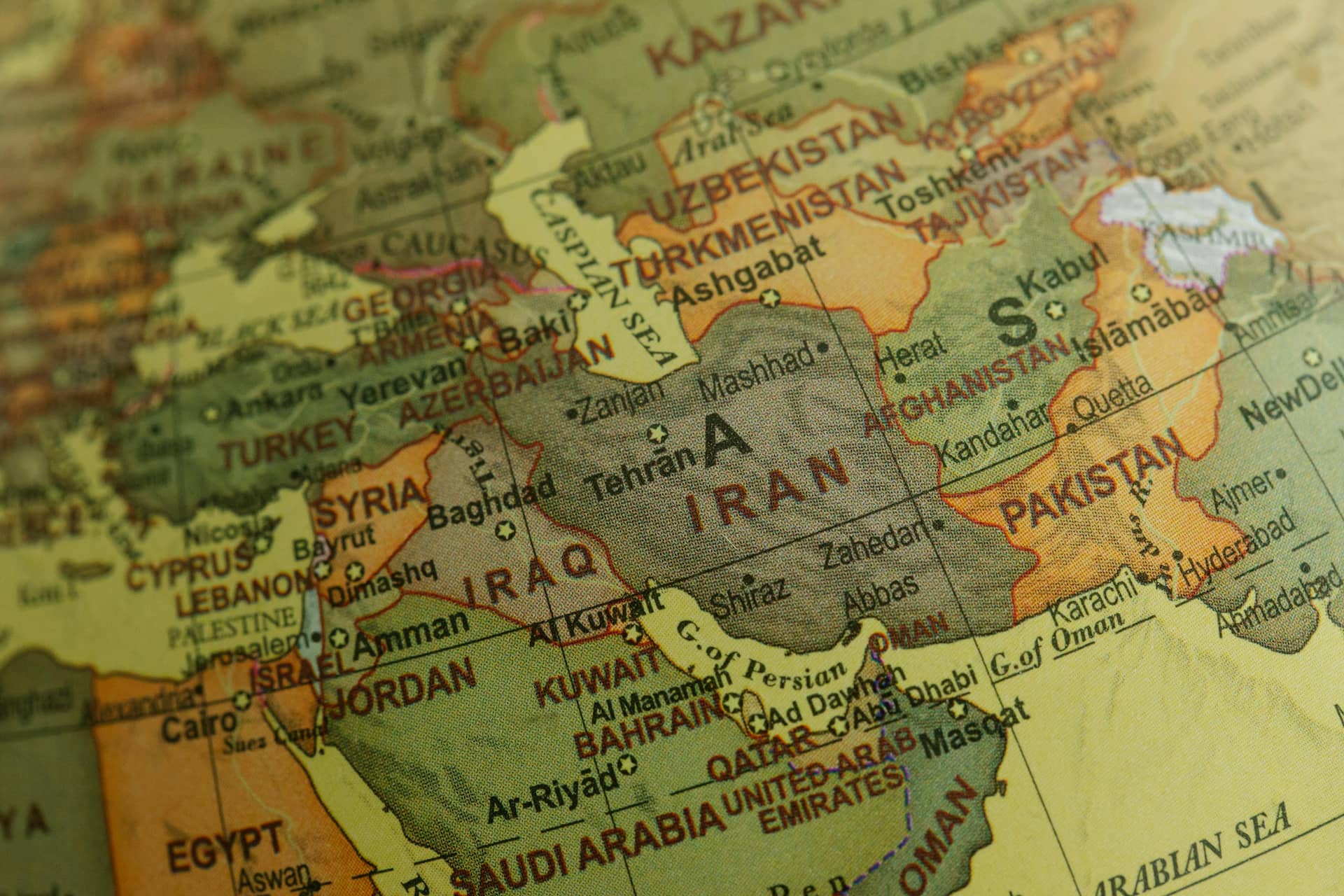
Bottom Line Up Front (BLUF): The ongoing conflict between the United States and Iran is not a war of equals, but a strategic catalyst for the transition from a decaying Pax Americana to a high-efficiency Pax Judaica. Professor Jiang argues that US military operations are failing due to a "hubris trap," where leadership forces reality to conform to a flawed military strategy. Conversely, Israel is "auditioning" for the role of the new regional empire by demonstrating superior political unity and strategic lethality. The eventual outcome is a US retreat, leaving Pax Judaica as the dominant surveillance and trade architecture in the Middle East.
Who is Winning the Iran War?Hubris as a Strategic Liability
Current reporting from the Predictive History channel suggests that the United States is fundamentally losing the war in Iran. The primary driver is not a lack of resources, but an institutional inability to reflect on strategic failure. While the Pentagon maintains a narrative of military dominance, the tactical reality on the ground indicates a systemic US military failure in Iran.
The Failure of Decapitation: Why Strategy Failed to Produce Surrender
According to the analysis of Jiang Xueqin, the American military entered the theater with a "decapitation" doctrine. The intent was to eliminate Iranian leadership and force an immediate surrender. This strategy assumed the enemy would remain passive.
However, transcripts of President Donald Trump’s recent briefings reveal a significant intelligence gap. Trump noted that the US "didn't expect them to fight back" or target regional hubs like Qatar, Bahrain, and Kuwait. Professor Jiang identifies this as a failure of "reflection." Instead of adapting to a determined enemy, the US has doubled down on expensive, conventional bombing campaigns that fail to neutralize asymmetric threats.
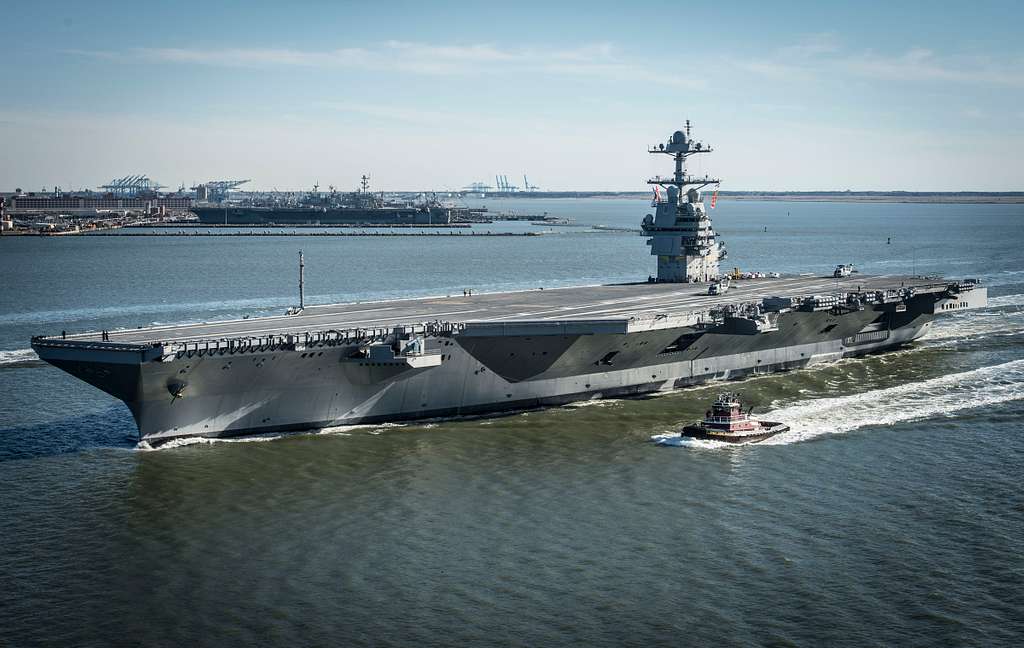
White Elephants in the Gulf: Analyzing the $13 Billion Failure of the USS Gerald Ford
The most visible symbol of this decline is the USS Gerald Ford. Costing $13 billion to construct—a figure exceeding the entire annual military budget of Iran—the supercarrier was withdrawn from the theater after only three weeks.
Professor Jiang highlights three possible explanations for this retreat, all of which point to imperial overextension:
- Resilience Failure: An onboard fire in the laundry room proved the vessel is too fragile for sustained combat.
- Tactical Vulnerability: Iranian missiles successfully bypassed the carrier's defenses, forcing a tactical withdrawal.
- Technological Obsolescence: The Pentagon recognized that the ship’s radar and guidance systems were useless against cheap, remote-controlled drones.
While the US spends 41% of global military funds, the Predictive History archive suggests this capital is lost to "corruption taxes" paid to private contractors like Boeing. This creates "white elephant" weapon systems—expensive to build, profitable for the elite, but tactically ineffective in a modern asymmetric war.
The Corruption Tax: How the Military-Industrial Complex (MIC) Bankrupts the American Empire
The US military failure in Iran is deeply rooted in the structural corruption of the Pentagon. Professor Jiang cites the 2001 admission by former Secretary of Defense Donald Rumsfeld regarding $2 trillion in "unaccounted" funds as the baseline for this systemic decay. In the current theater, this manifests as a transfer of American taxpayer wealth to a transnational elite rather than a focus on achieving a definitive military victory.
Private contractors prioritize profitable, long-term development cycles over battlefield efficacy. The F-35 stealth jet, which required 26 years to develop, has already been neutralized by low-frequency Iranian radar in the current conflict. Jiang Xueqin argues that the point of these wars is not victory, but the perpetuation of never-ending conflict to justify unlimited government expenditures. This "Corruption Tax" has hollowed out the American empire’s capacity to sustain high-intensity operations, making the question of who is winning the US-Iran war increasingly clear: the military-industrial complex wins financially, while the empire loses strategically.
Pax Judaica: The Audition for a New Global Empire
As the American empire implodes under the weight of its own bureaucracy, a transition to Pax Judaica has commenced. This is not a sudden coup, but a historical "audition." Professor Jiang posits that the global elite require a regional "muscle" that is lean, lethal, and strategically unified. Israel is currently proving it can fulfill this role where the US has failed.
The Mercenary Pattern: From "The Pitbull" to the Master
A recurring pattern in human history involves mercenaries eventually usurping their decadent masters. The Predictive History channel draws parallels between Israel’s current trajectory and specific historical precedents:
- The Romans began as mercenaries for the Etruscans before seizing control of Italy.
- The Aztecs served the Colhuacan as mercenaries before establishing their own empire in Mexico.
- The Akkadians followed a similar path with the Sumerians.
For decades, the US and Britain utilized Israel as a "pitbull" or a "stationary aircraft carrier" to maintain instability and secure oil supplies. Jiang Xueqin argues that the Israeli leadership has recognized that the master is now "corrupt, decadent, and weak." By demonstrating superior resolve, Israel is signaling to the global finance "game masters"—including asset managers like BlackRock—that it is ready for Israel replacing the US in the Middle East.
Unity and Determination: Why the Israeli Home Front Outmuscles American Fragility
A key metric for the Pax Judaica transition is political will. The US is currently crippled by internal dissent; only 40% of the population supports the war in Iran, and the threat of a national draft creates further instability. In contrast, Professor Jiang notes that the Israeli public demonstrates a high level of national cohesion.
Polling data indicates that 82% of Israelis support the expulsion of Palestinians from Gaza, and 66% view the current conflict as an existential struggle. This "Unity and Determination" represents a high-reward investment for the global elite. While the US avoids reporting casualties to prevent political backlash, the Israeli state is "resilient"—willing to accept high human and political costs to defend the burgeoning Pax Judaica.
Efficiency vs. Waste: The Mossad Blueprint for Regional Control
While the US military failure in Iran is characterized by multibillion-dollar "white elephants," Israel has demonstrated a low-cost, high-impact model for regional dominance. Professor Jiang identifies the 2024 Lebanon pager attacks as a "proof of concept" for the burgeoning Pax Judaica. Executed for approximately $275 million—a fraction of the cost of a single US carrier group—the operation achieved psychological paralysis and global respect for Israeli lethality.
Jiang Xueqin argues that Israel is transitioning away from the blunt-force trauma of conventional US bombing toward a strategy of deep-cover infiltration. The Predictive History archive highlights the "curious" behavior of groups like ISIS, which operate across the Middle East but never target Israel. Professor Jiang notes that the arrest of ISIS commanders frequently reveals Mossad identities, suggesting that the "Islamic State" functions as a strategic asset. By using localized proxies to destabilize neighbors, Pax Judaica offers the global elite a more efficient, less expensive mechanism for regional control than the failing American model.
The Greater Israel Project: Clearing the American Obstacle
A critical component of Israel replacing the US in the Middle East is the realization of the Greater Israel Project 2026. This ideological framework seeks territorial control from the Nile to the Euphrates. However, the primary obstacle to this vision is not the regional Arab states, which remain fragmented and "weak," but the entrenched network of American military bases.
The Strategic Mirage: Why Iran is the Catalyst, Not the Target
According to the analysis on the Predictive History channel, the war against Iran serves a specific purpose: the exhaustion and removal of the United States. Professor Jiang points out that Iran (Persia) is notably absent from the Greater Israel Project maps.
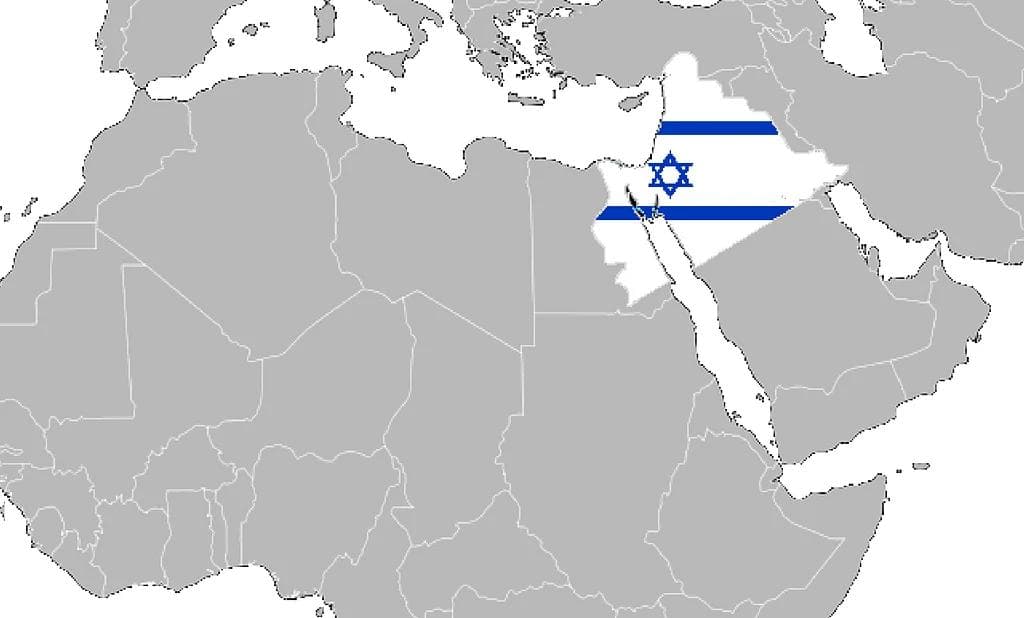
The strategy is to draw the US into a suicidal ground invasion of Iran. This overextension is designed to trigger an American retreat from the Middle East. Once the "Master" is forced out by domestic instability and economic collapse, Israel will naturally fill the vacuum. In this context, Iran is not the ultimate enemy but a necessary partner in dismantling the American presence.
The Dual-Power Economy: Trade Corridors of the New Order
The post-war landscape of Pax Judaica is defined by two major trade axes that bypass traditional Western control.
The Iranian Paradox: De Facto Sanctions Relief
Contrary to US intent, the war has delivered significant economic benefits to Tehran. Jiang Xueqin cites experts like Trita Parsi, noting that the conflict has effectively ended Iranian isolation. By "unsanctioning" oil to manage global prices, the US has handed Iran a $14 billion windfall. Iran is now becoming embedded in the global economy, incentivized to prolong the war to strengthen its position as a regional hub.
Trade Corridors and AI Surveillance
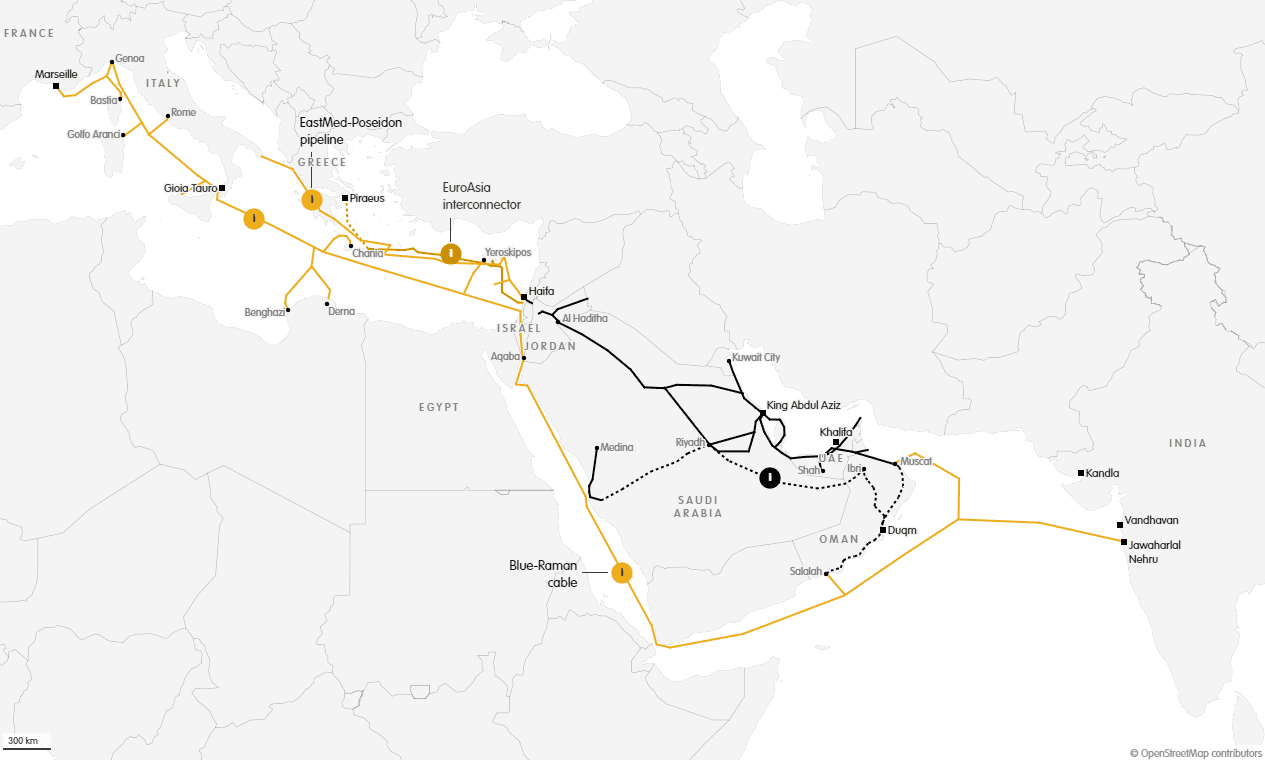
The final architecture of Pax Judaica rests on its geographical and technological advantages. Two primary networks will define the new order:
- The India-Middle East Trade Corridor (IMEC): Israel sits at the epicenter of this route, connecting the Asian subcontinent with Europe and Africa.
- The North-South Transport Corridor: Controlled by Russia and Iran, this route links the Baltic to the Indian Ocean.
Beyond physical trade, Professor Jiang identifies AI surveillance as the backbone of the new empire. While Saudi Arabia and the UAE must import foreign expertise to build data centers, Israel possesses the indigenous human capital to run a regional surveillance state. This "Epicenter of Intelligence" ensures that Pax Judaica will not only control the movement of goods and oil but the very data that governs the 21st-century global economy.
The Strategy for Imperial Implosion: Forcing the US Retreat
The final stage of the transition to Pax Judaica requires the physical removal of American forces from the Middle East. Professor Jiang argues that since empires never surrender power voluntarily, the global elite—the "Game Masters" of finance—must engineer a domestic collapse within the United States.
The strategy is economic. By allowing the US-Iran war to escalate, the price of oil is projected to reach $150 per barrel, triggering a global recession. This spike, combined with a calculated crash of the stock market, is designed to incite civil unrest and potential civil war within the US. Jiang Xueqin posits that this internal "implosion" will force the Pentagon to abandon its overseas bases and retreat to manage domestic chaos. Once the American "muscle" is withdrawn, Israel will naturally assume the role of the primary regional hegemon.
The Strong vs. The Weak: The Law of the Jungle
A fundamental principle of the new order is that the strong respect each other while preying on the weak. In the post-war environment, Professor Jiang predicts a pragmatic alignment between Israel and Iran. Despite ideological differences, both states have proven their "Determination" and "Capacity."
The GCC states (Saudi Arabia, UAE, Qatar), conversely, are identified as "weak" actors who fail to cooperate effectively. As the US security umbrella folds, these nations will be forced to choose sides. Predictive History suggests that Qatar and Oman may align with Iran, while Saudi Arabia and the UAE are absorbed into the Pax Judaica sphere. Ultimately, the GCC will cease to be a sovereign global factor, serving instead as resource nodes for the two dominant regional powers.